Drywall, sheetrock and plaster repair
Drywall Repair in Rio Vista, CA
Nail heads lifting along a hallway seam, a crack climbing from a door corner, a brown ring left overhead by a winter leak: each one gets repaired, textured to blend in, and sealed with primer so the wall is set for its next coat of paint.
Rio Vista Drywall Repairs handles the calls and texts for sheetrock repair in this Solano County river town and the Delta communities around it. You talk the damage through with a nearby sheetrock pro and hear the price up front, ahead of any sanding or cutting.
01Where paint meets patch
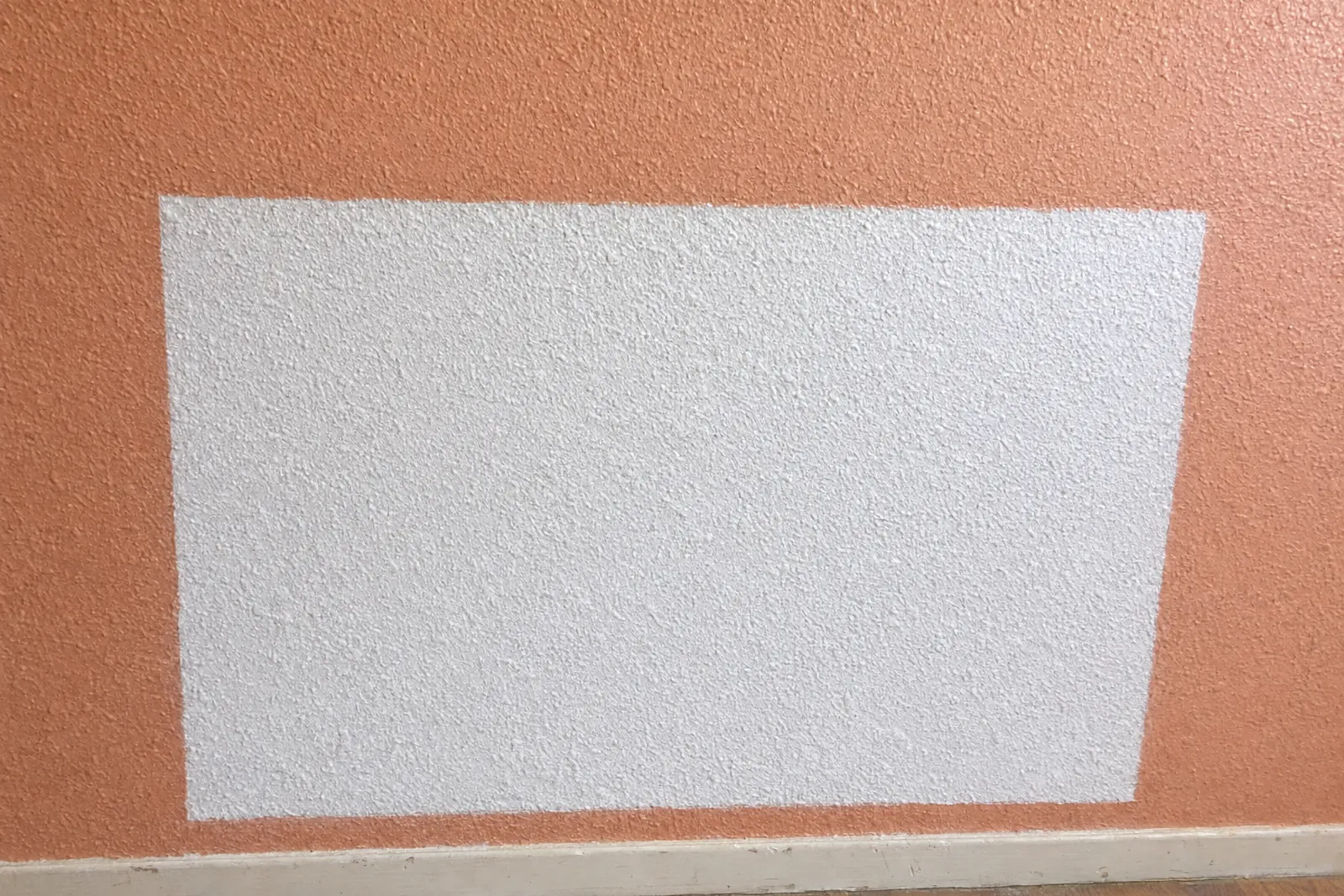
Think back to the last repaired spot that gave itself away. Chances are it was morning, with low sun sliding down a hallway and grazing the wall. The patch could be flat and solid and still read as a dull square or a glossy one. Painters call that flashing, and nine times in ten the trouble lives in the primer and the paint rather than the compound below.
Seal the mud before color
Joint compound drinks paint. Rolled straight onto bare mud, a finish coat soaks in unevenly and cures with a sheen unlike the painted board next to it. Drywall primer over the repair evens out that thirst, so the color goes down alike everywhere.
Matching the sheen
Flat, eggshell and satin paints bounce light differently even in one color. A spot touched up in flat on an eggshell wall turns into a separate shape. Hunting down the old can, or the label someone once stuck inside a closet, saves a lot of guesswork.
Rebuild the pattern, then prime
Where a wall carries orange peel or knockdown, the pattern goes back onto the repair while the mud is still bare, cures, and gets primed afterward. Paint on its own will not disguise a smooth square in a bumpy wall.
Paint in the price, or not
Plenty of people keep leftover paint and enjoy rolling the last coat. Others would rather hand off everything. Mention your choice on the phone and the figure is drawn up to suit: primed for your roller, or finished in color.
Corner to corner
On paint that has faded with age, a touch-up can jump out even in the right color. Rolling the final coat from one inside corner across to the other, rather than dabbing the mended area, is the usual cure, and it is worth raising while the price is worked out.
Two prices, one decision
Unsure about paint? Ask for the figure both ways. With the two numbers next to each other, the choice tends to make itself.
02Four familiar wall problems
Most drywall damage arrives in a handful of recognizable shapes. The four below turn up in houses of every age; they are general cases, each paired with the work a lasting fix calls for.
When a doorknob goes through the board
A door swings past its missing stop and the handle punches out a ragged circle about as wide as a softball. A proper fix squares off the opening, sets backing behind it, screws a snug replacement square in place, tapes the edges and builds up thin layers of mud before the pattern is restored. A new door stop keeps the story from repeating.
A row of bumps along one stud
In a nailed house, little domes sometimes rise in a neat vertical file, a foot or so apart. Each one is a nail that crept outward while the lumber behind it dried. The fix sinks a drywall screw right next to each nail to draw the board snug, drives the nail below the face, and spots every location with mud.
A crack climbing from a door corner
Slanting cracks favor the upper corners of doors and windows, where framing takes the most strain. Filler smeared into the line seldom lasts. The crack is opened up a little, bridged with paper or mesh tape, and feathered broadly so any movement spreads over more wall.
A tea-colored ring under a bathroom
A slow drip at a toilet seal or shower valve can tint the ceiling below for weeks before anyone glances up. With the plumbing put right, the board gets a moisture reading. Sound, dry drywall can take a stain-blocking primer; board that has softened or dropped gets replaced.
03The four repair lines
Each repair here is priced up front by the drywall contractor who would carry it out. Choose whichever sounds nearest to the trouble on your wall, or just describe it and we will work out which it is.
Seam and Nail Pop Repair
Lifted tape, split joints and the little round bumps that march down a stud line, fastened back and refinished.
Seam and nail pop repair detailsWall and Ceiling Crack Repair
Slanting lines off door frames, long ceiling splits and tired plaster, widened, taped across and feathered.
How cracks in walls and ceilings are handledCeiling Leak Repair
Rings, soft patches and drooping board left by a roof, pipe or toilet, sealed or replaced after everything dries.
Ceiling leak and stain repairDrywall Texture Matching
Orange peel, knockdown, sand finish or smooth, rebuilt over a repair so the eye slides past it.
Matching orange peel, knockdown and smooth walls04Price, and what moves it
Ask anybody who has priced a wall repair and they will say the first number they heard was not the final one, usually because the stain turned out larger behind the paint than in front of it. Size counts, but plenty else nudges the figure too.
To get a feel for the range, national figures help. Fixr's drywall cost page puts typical hole repairs at roughly $60 to $200, and drywall water damage confined to one room at around $400 to $800. This Old House says big holes generally start near $100, while a damaged ceiling section can run $320 to $1,300. Those numbers are national, collected by cost guides, and not Rio Vista prices; the number that matters is the one the local pro gives you once the damage has been discussed.
How many, how large
One softball-sized hole and five little dings across three rooms are different jobs, though bundling them usually comes out cheaper than tackling each separately.
Overhead or upright
Ceiling work is slower, takes more setup and rains more dust onto whatever sits below.
Texture
Smooth walls are the plainest finish. Knockdown and orange peel have to be recreated and blended, adding a step and a drying pause.
Moisture behind the ring
Damp board must dry out or be removed. Mushy drywall, soaked insulation or a droop turns a seal-and-paint visit into a cut-out.
Paint
Primer by itself, color on the mended area, or a full wall rolled corner to corner: each is priced its own way.
Reach
A two-story stairwell or a vaulted ceiling calls for taller ladders or scaffolding.
05Three ways to go, compared
Stand looking at a damaged wall for long enough and three possible routes come into view. The table lines them up against the practical questions.
| Patch in place | Cut out and replace a section | Skim coat the wall | |
|---|---|---|---|
| Suits | Small holes, nail pops, short cracks | Mushy or water-damaged board, big holes, a drooping ceiling | Lots of small dings, torn face paper, a rough old surface |
| Board removed | Nothing, or a small square | A piece reaching the closest studs or joists, occasionally a whole sheet | Nothing |
| Dust and mess | Light, mainly sanding | The most: cutting as well as sanding | Moderate, with sanding spread wide |
| Coats of compound | Two or three thin ones | A tape coat plus two or three more | Two or more over the entire wall |
| Texture to rebuild | A small spot | The new piece and its margins | All of it, if the wall was textured |
| Paint afterward | The mended spot, ideally wall to wall | The new piece and its surroundings | Every inch of the wall |
06When the choice is not obvious
Now and then the answer is murky: a ring that has spread over two ceiling joists, say, or a wall already wearing three old patches. The guide works through the questions that settle it, from how the board feels under a thumb to whether the old pattern can be rebuilt.
Work through the patch-or-replace guide or browse the drywall guides page.
07For owners of rented houses
In the 2020 census, a little under one in five occupied homes in Rio Vista was rented (19.1 percent). For the people who own those houses, wall damage loves to show itself at the worst moment: the morning after a tenant returns the keys, with the next one due in a week.
Send the move-out photos. Walkthrough pictures with something in frame for scale let the pro give a ballpark over the phone and bring suitable materials.
Batch the rooms. Three small holes in three bedrooms cost less as one job than as three calls, because each round of compound has to set up before the next one.
Explain the access. With the house empty, mention the lockbox or how keys change hands. With a renter still in residence, pass along their number and the days that suit them so the work fits their week.
Ask for texture and paint together. Between tenants, a wall finished in color is ready to show; a primed square waiting on paint is one more chore on the turnover list.
Write the paint down. Brand, color name and sheen, penciled inside a closet door, spare everyone a round of guesswork down the road.
08River towns on the list
Rio Vista occupies the eastern end of Solano County along the Sacramento River, and repairs are arranged here and in the Delta settlements around it.
Isleton. A small city on Andrus Island, across the river to the east.
Ryde. A riverside settlement in Sacramento County, upstream of Isleton.
Birds Landing. A Solano County hamlet out west, past the Montezuma Hills.
Collinsville. A rural spot near where the Sacramento River meets Suisun Bay.
Walnut Grove. A Delta town on the river, home to a historic Japantown.
Courtland. A river community farther north, known for its Pear Fair.
09Two parts of town, two kinds of wall
Walk from the riverbank up past Main Street and out toward the newer streets and you cross well over a century and a half of building. What a wall is made of shifts along the way, and the repair shifts with it.
Trilogy at Rio Vista
This gated community for residents 55 and over began in 1996 as Summerset at Rio Vista and took the Trilogy name once Shea Homes bought the project in 1999; listing data from 55places gives 1996 to 2020 as the span of construction. That means drywall hung over framing that spent its first seasons drying out, which is exactly when nail pops and hairline joint cracks like to appear.
The old town plat around Main Street
Once the floods of 1861 and 1862 drove the settlement uphill, Joseph Bruning recorded the plat of New Rio Vista in 1862, with Main Street dividing two ranches, according to the Rio Vista Museum. Homes from the early decades of a town like this may hide plaster over wooden lath instead of gypsum board, so a good repair starts by working out what the wall really is.
Citywide, the Census survey covering 2020 through 2024 places 279 surviving homes before 1940 and 3,768 of 5,135 from 1990 onward. Put another way, close to three in four houses here have drywall rather than plaster.
10Soon versus someday
One evening a faint line appears over the living room doorway, and the question is whether it can sit until spring. Some damage can. Some should not.
Deal with these first
A ceiling that droops or is full of water. First thing: flip off, at your electrical panel, whichever circuit runs the lamps and fan nearest the bulge. With those dead, keep the household, dog and cat too, out of the room below and stand a bucket under the sag. Waterlogged board is heavy and it can fall without notice.
A ring that grows or feels damp. The leak is still live. Drywall work waits until the source is repaired and the board has dried, but tracking down that source should not wait.
A crack that widens, or a door that suddenly rubs its frame. Movement still under way deserves a look from the right trade before any cosmetic work, or fresh tape will just split along the old line.
Fine to leave a while
A single nail pop. Untidy, harmless. Add it to the next batch of small fixes.
A hairline crack that holds still. Pencil a tick at each end. If it has not crept past them in a few months, mend it whenever the room is next painted.
An old, dry ring. If the leak was dealt with long before and the board is firm, it comes down to stain-blocking primer and paint.
A scuffed or dented corner. Ugly in a hallway, and split corner bead can snag a sleeve, yet it can usually wait to be bundled with other work.
11What the marks usually mean
Before calling anyone, step back and put a name to what you see. Most marks point toward one likely cause, and each cause has its own repair.
| What you see | Likely cause | Matching repair |
|---|---|---|
| Little domes in a vertical row | Nails creeping outward from drying lumber | nail pop fixes |
| A long line along a joint, tape lifting | Joint movement, or a tape coat that lost its grip | taped seam repairs |
| A slanting crack off a door or window | Strain concentrated in the framing at that opening | corner crack repair |
| Lines running across a ceiling | Joints shifting between joists, or weight sitting on the ceiling from above | ceiling crack work |
| A brown or tan ring overhead | Water from a roof, pipe, toilet or air-conditioning line | water-stain repair |
| Paint bubbles or blisters | Damp behind the surface, or paint laid over dust | checking for hidden moisture |
| A smooth square on a textured wall | An earlier patch left without texture | texture blending |
12Start with a photo and a few lines
Mention the room, the likely cause and the rough size. A single texted picture usually beats a written description.
(707) 415-8465Phone now and a nearby pro talks the wall through with you and names a figure up front.
Call 7 days, 7am–9pm
What comes next: a sheetrock pro close by rings you to hear about the damage and agree on a price.